
DOES ANYONE ELSE FEEL STUCK on a timeline that is too confounding for words? Everything around me feels shoved into reverse as it stutters forward. Can a crab walk in two directions at the same time? Because it seems like anything can happen, especially if it makes no sense. And what does it signify when the people you’ve always known best are people you feel you don’t know at all? Is it only me? I doubt it. And that feels like the point. I need to slow down, start somewhere, so, because I’m the center of my own universe, let me start with Sunday morning, Sept. 28, 2025. I know what happened then. Not really. Oh, and it might be important to know (if you didn’t already) that I’m a Latter-day Saint. A Mormon. (Can I say that again?) Or it might not matter at all.
So here it is. On Sunday morning, a 40 year old man – a veteran who decorates his pick up truck with US flags and his home with a Trump sign – plowed into a Stake Center of the Church of Jesus Christ of Latter-day Saints and then rained terror in the form of gunfire and improvised explosive devises on a congregation that included scores of children. He killed four people and wounded eight. To his mind, each victim, whether killed, wounded or traumatized, is or was, an “antiChrist” (his word), a Mormon, someone like me. The word he used – “antiChrist” – is decidedly Christian, but the actions he committed are not.
Continue reading “Whack-a-Doodle Timelines, the Death of a Prophet, and a Massacre or Two”


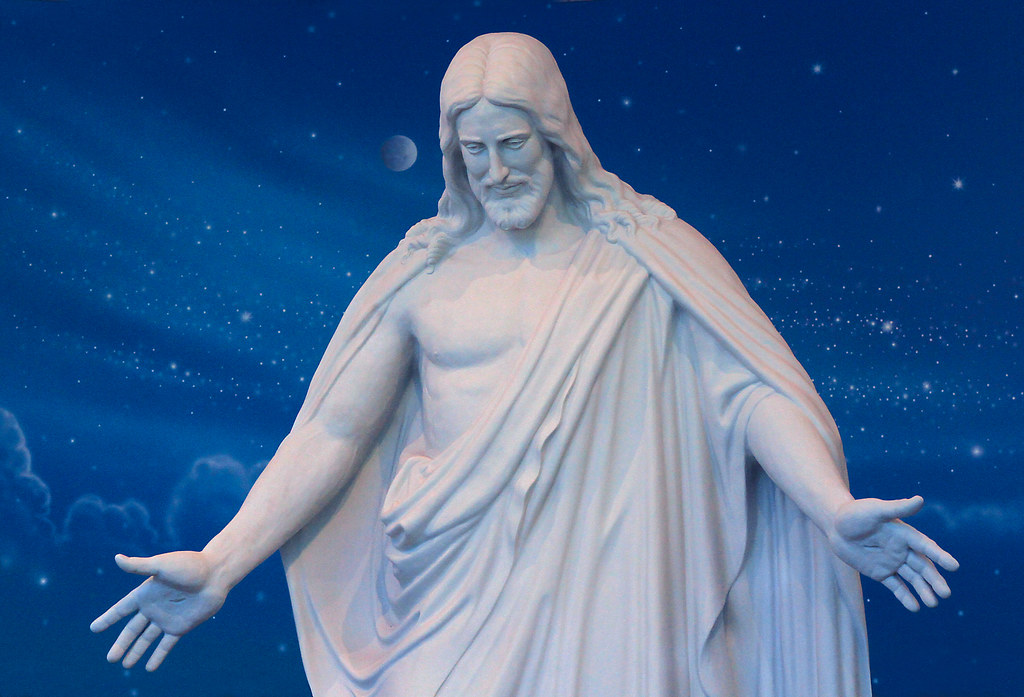 There was a time I accepted the phrase “Love the sinner; hate the sin,” but I always felt uncomfortable using it. Eventually, I started giving the expression second thought, and I realized the parallelism of the phrase suggests a balance between the ideas of love and hate. But love and hate don’t balance one another. Just as light cannot be where there is darkness, love cannot be where there is hate.
 Several weeks ago, a Gospel Doctrine teacher stated that “The Church is true, but the members are not.” Judging by the nods of assent, I’d say those sitting with me agreed with her. My natural inclination, as a language person, is to pick apart the word “true” until there’s no meat left on its bone. But I’ll spare you that. I do, however, want to to focus on the underlying assumption of the statement, namely the inference that the Church, as an institution, is better than its people. I’m not sure we really mean that.
 Life Outside The Book of Mormon Belt